We would like to represent functions using continued fractions (similarly as we did for numbers). For example, a well-known continued fraction representing 

Continued fractions like this one typically have a bigger definition domain compared to the corresponding Taylor series. This is illustrated graphically in figure 1 and figure 2.


The continued fraction representation of a function seems a promising approach since the radius of convergence ‘seems’ at a first glance much bigger and the approximation ‘looks’ much better (i.e. converging faster) than for Taylor and Maclaurin series. We will illustrate these statements.
In order to make some progress in the construction of continued fractions corresponding to functions, we’ll start by defining the following rational functions, which will prove to have interesting properties in their own right:


Using the definitions above we present some examples using the first terms of the Maclaurin series of


In the example above we are considering a 

Comparing the coefficients of both sides we obtain:


Solving the set of equations above gives:


This is clearly the first term of the continued fraction of

Let’s calculate the 


Keeping only degrees up to 3:

Comparing the coefficients of both sides we obtain:


We observe that (in this case):

Now we calculate the 


Keeping only degrees up to 6:

This implies:


Solving the set of equations above gives:


Now consider the first terms of the continued fraction of


Therefore, the 
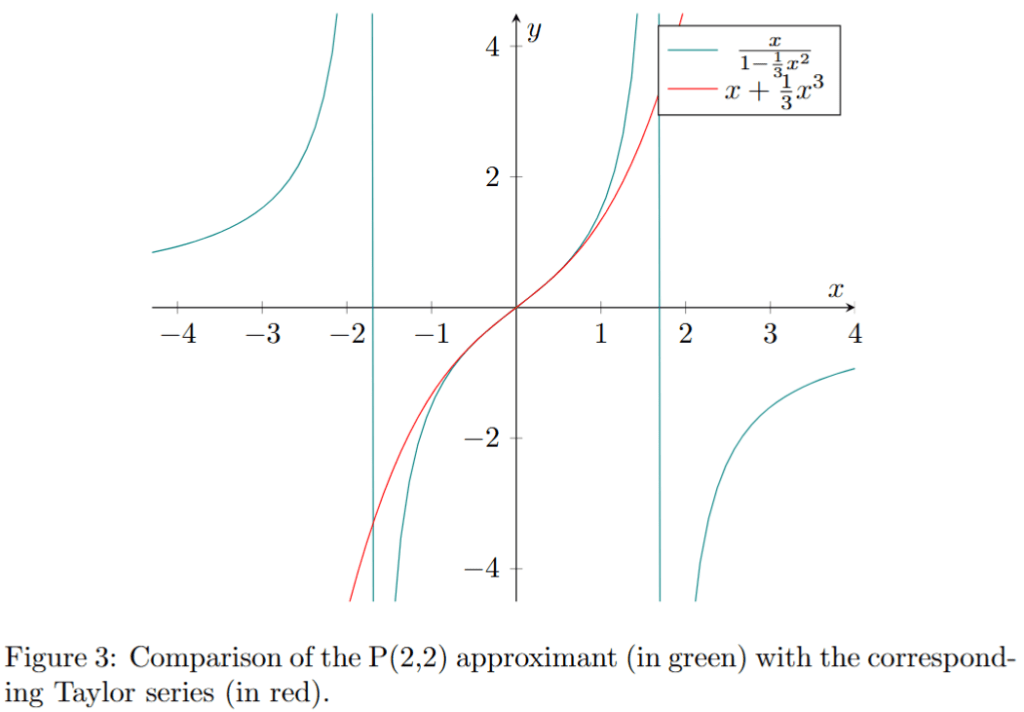
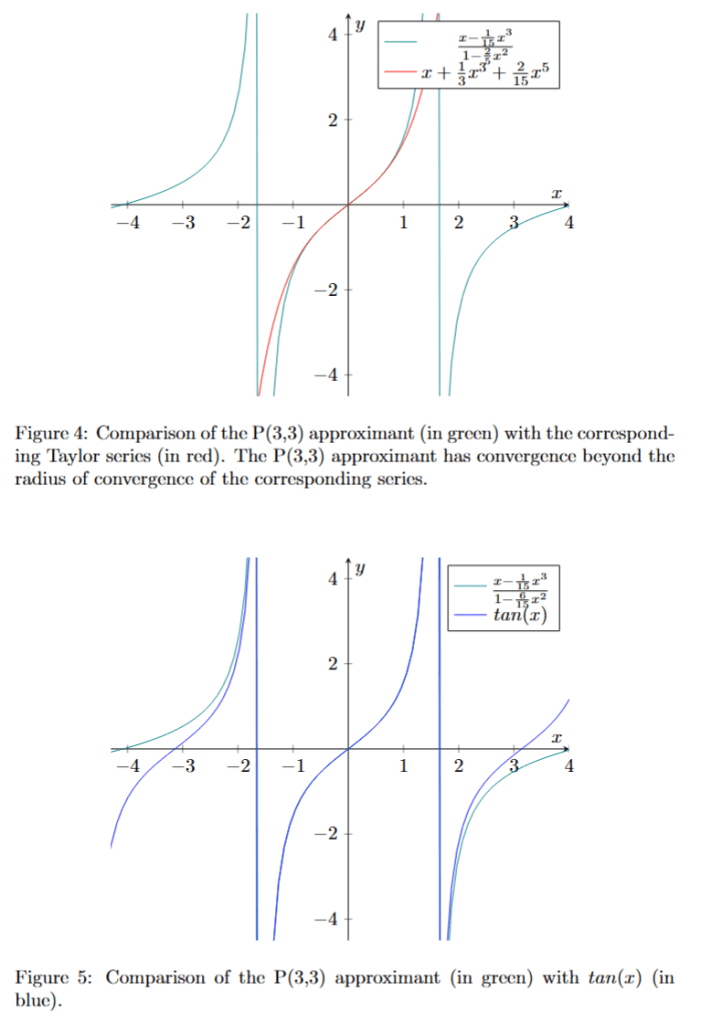
The results above about
This gives hope for the use of divergent series as often encountered in perturbation theory.
We would like to calculate the 


Keeping only degrees up to 2:

This implies:


Solving the set of equations above gives:


We observe that

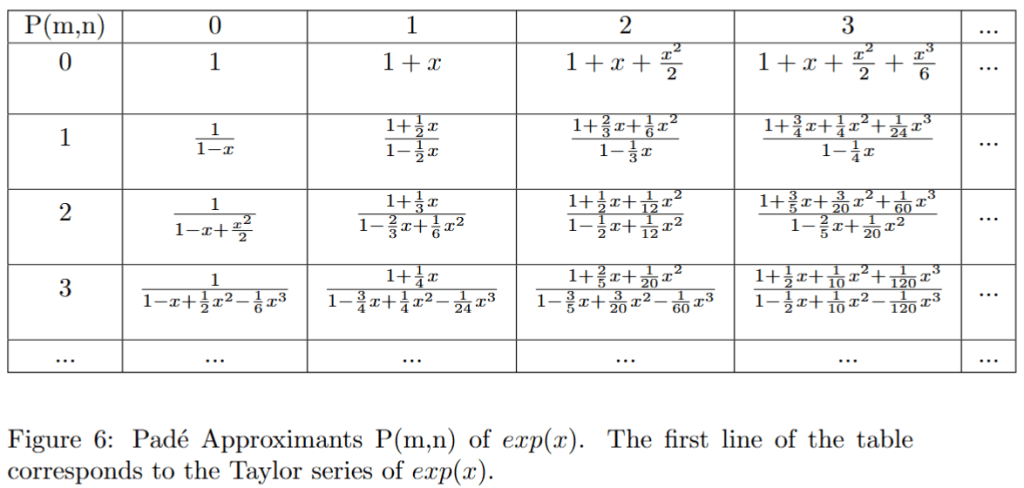
Figure 6 shows 16 Padé Approximants for 

 Approximaths
Leave a comment